The UK gluten-free market continues to expand, creating significant opportunities for food manufacturers, retailers and hospitality businesses. However, growth must be matched by safe practices, accurate information and genuine customer confidence.
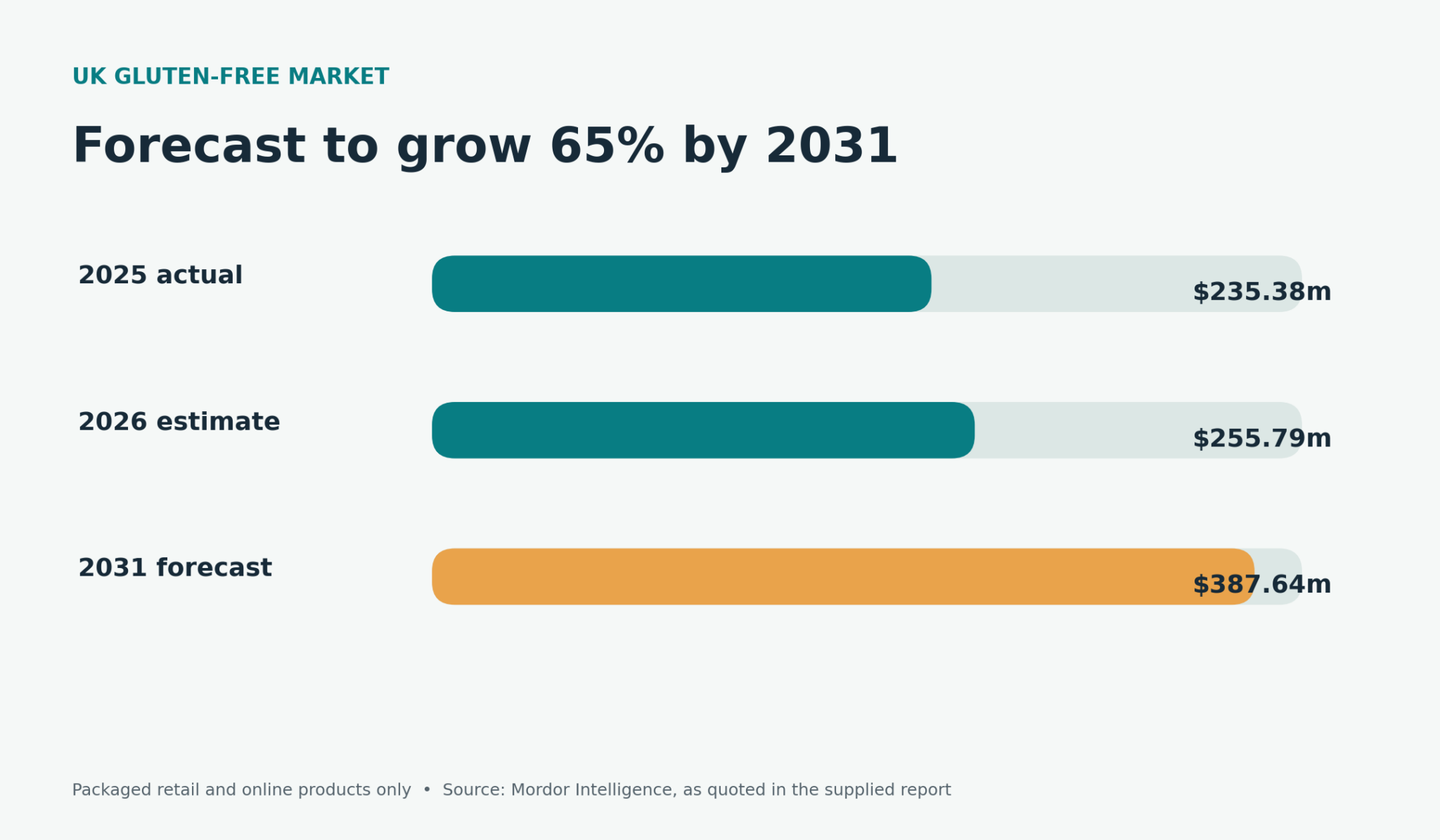
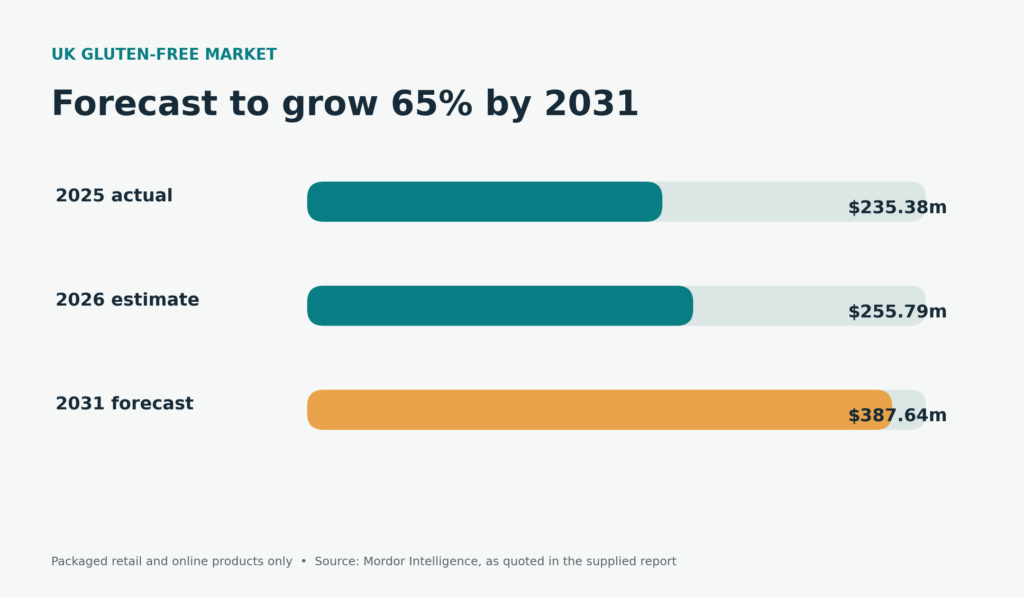
According to a recent Mordor Intelligence report, the UK gluten-free food and beverage market was valued at USD 235.38 million in 2025. It is expected to reach USD 255.79 million in 2026 and is forecast to grow to USD 387.64 million by 2031 an annual growth rate of 8.67% between 2026 and 2031.
The report relates specifically to packaged foods and beverages sold through retail and online channels. It excludes restaurant and foodservice sales, as well as naturally gluten-free foods that are not marketed with a gluten-free claim. Nevertheless, the findings provide a useful indication of changing customer demand and the wider commercial opportunity.
What is driving the growth?
Demand is being driven by several groups. For people diagnosed with coeliac disease, a strict gluten-free diet is a medical necessity. Other customers may avoid gluten because of non-coeliac gluten sensitivity or another health need, while some choose gluten-free products as part of a lifestyle or wellness preference.
Greater awareness, improved product availability and continued innovation are all helping the market develop. Manufacturers are working to improve taste, texture and nutritional value, while supermarkets have expanded their gluten-free ranges.
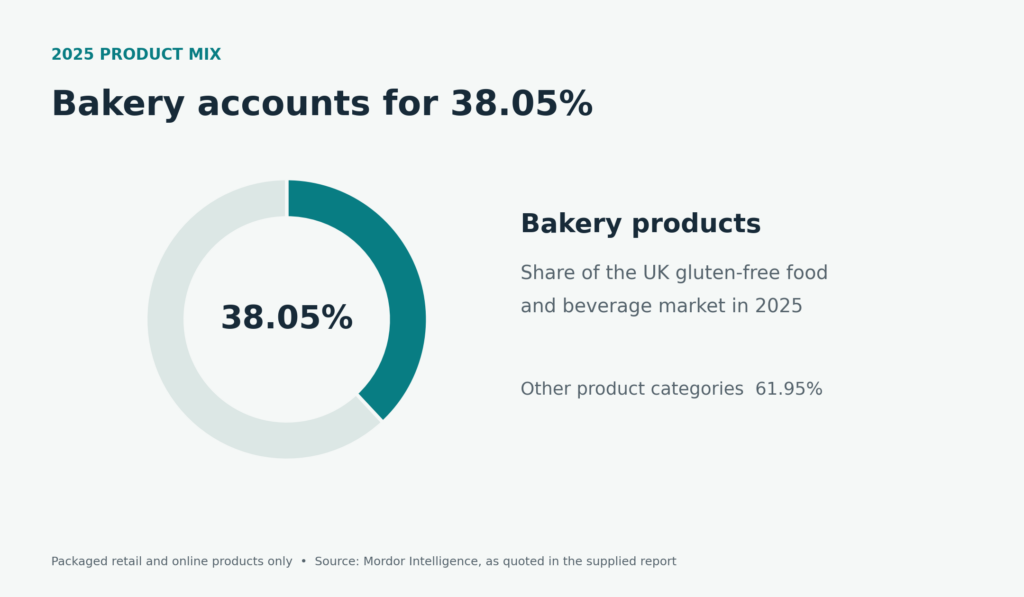
Bakery remains particularly important. Mordor Intelligence reports that bakery products accounted for 38.05% of the UK market in 2025. Beverages are forecast to be the fastest-growing product category, while online retail is predicted to be the fastest-growing distribution channel through to 2031.
These trends suggest that customers want more than a limited selection of specialist products. They increasingly expect gluten-free choices across everyday meals, snacks, bakery items and drinks and they want to find them easily, whether shopping online, visiting a supermarket or eating away from home.
Affordability remains a major barrier
Strong market growth does not mean that access is equal. The report highlights the premium price of gluten-free staples and the additional financial pressure this creates for people who have no choice but to follow a strict gluten-free diet.
This is an important distinction. For a customer with coeliac disease, gluten-free food is not a luxury product or a passing trend. Businesses have an opportunity to review pricing, portion sizes and menu design so that safe choices are both appealing and reasonably accessible.
What does this mean for hospitality and foodservice?
Although the market figures do not include restaurant and foodservice sales, the growth in retail demand is likely to shape customers’ expectations when eating out. Customers who can access a broad range of products at home will reasonably expect better choice, clearer information and greater confidence in hospitality settings.
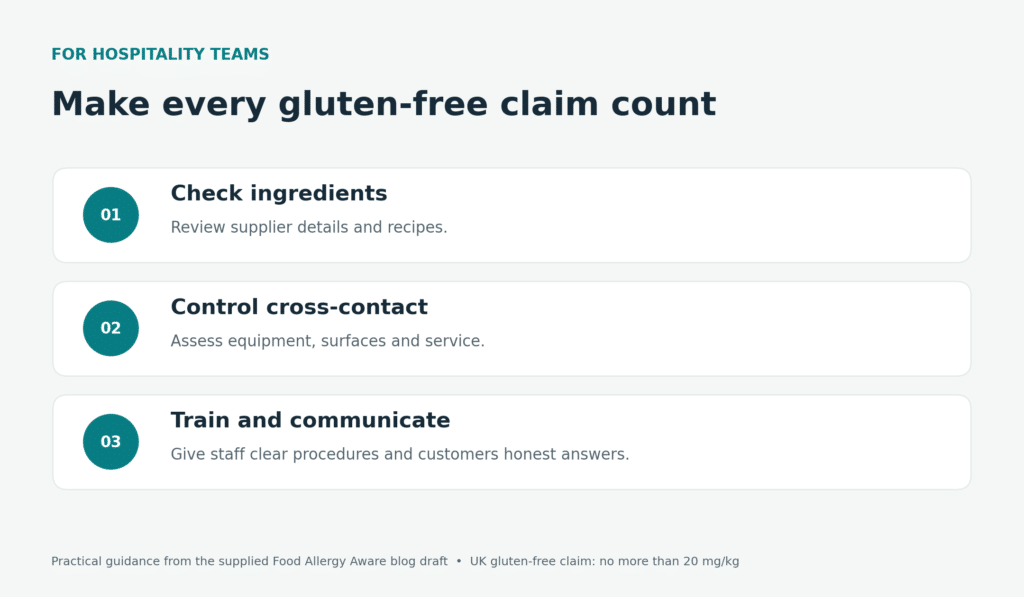
Simply adding the letters “GF” to a menu is not enough. Before making a gluten-free claim, a business must understand its ingredients, suppliers, recipes, preparation methods and cross-contact risks. In the UK, food described as “gluten-free” must contain no more than 20 mg/kg of gluten.
Practical controls should include:
- checking full ingredient and supplier information;
- assessing risks from fryers, grills, toasters, utensils and preparation areas;
- managing flour and other airborne or easily spread ingredients;
- using clear, consistent recipes and allergen information;
- training staff to understand both gluten-free claims and cross-contact risks;
- communicating honestly when a request cannot be accommodated safely;
- regularly reviewing controls through audits, near-miss reporting and customer feedback.
Businesses should also avoid assuming that a naturally gluten-free dish is automatically suitable. A dish may begin with ingredients that do not contain gluten but become contaminated through storage, preparation, cooking or service.
Choice creates opportunity; confidence creates loyalty
The projected growth of the UK gluten-free market is encouraging. It shows a clear appetite for greater choice and continued innovation. But long-term success will depend on more than launching new products or adding extra menu options.
Customers need to be able to trust the information they are given. For those with coeliac disease, poor controls or an inaccurate claim can have serious health consequences. For businesses, getting it right can build confidence, loyalty, positive recommendations and repeat visits.
The strongest opportunity is therefore not simply to offer more gluten-free food—it is to offer suitable choices backed by robust allergen management, knowledgeable teams and clear communication.
Food Allergy Aware supports food businesses with allergen policies, food safety management systems, practical training, audits and certification. If you would like help reviewing your gluten-free offer, labelling and the controls behind it, contact us to discuss the most appropriate support for your business.
Admin@fatc.co.uk