
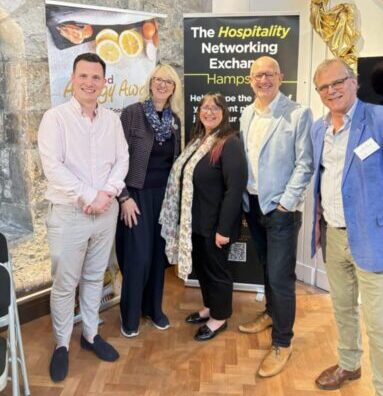
How can hospitality businesses reduce waste, improve resource efficiency and prepare for future environmental legislation without compromising service or quality?
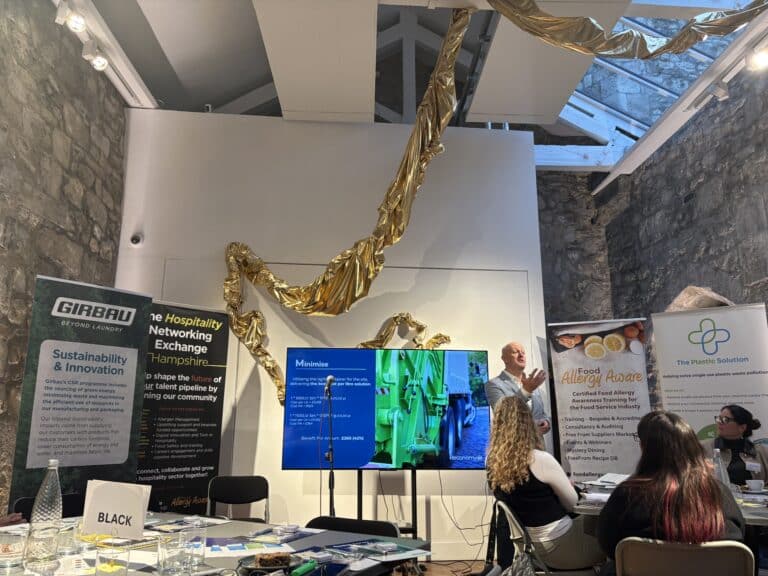
That was the central question at our latest Hospitality Networking Exchange – Hampshire (HNE-Hants) event, held on Tuesday 20 October 2026 at the historic God’s House Tower in Southampton.
The morning brought together professionals from hospitality, catering, education, sustainability and the wider supply chain to explore practical solutions, share experiences and identify opportunities for collaboration.
From reusable chemical containers and water-efficient laundry systems to food waste management and forthcoming environmental regulations, the discussions demonstrated that sustainability is not simply about meeting targets – it is about working smarter, reducing unnecessary costs and making better use of valuable resources.
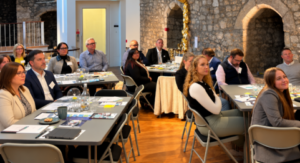
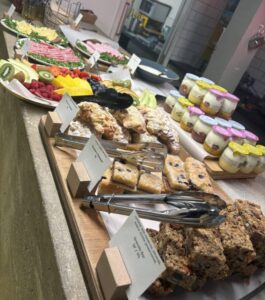
We were delighted with the positive feedback from attendees, with speaker ratings reaching 87% Excellent and 80% of respondents confirming they had achieved their objectives for attending.
A particular highlight was the venue, with 93% of respondents rating God’s House Tower as Excellent. Our sincere thanks go to God’s House Tower, Southampton, for hosting us in such a wonderful historic setting and providing a warm welcome, breakfast and refreshments, all of which contributed to the success of the morning.
For venue enquiries, please contact Hannah at hannah@aspacearts.org.uk.
Sustainability Starts in the Laundry – Girbau and The Plastic Solution
Our event sponsors, Girbau and The Plastic Solution, delivered a joint presentation demonstrating how innovative technology and circular-economy solutions can work together to reduce the environmental impact of commercial laundry operations.
A key discussion focused on the challenges surrounding traditional chemical packaging.
Many commercial chemical containers are used once before entering waste streams, with containers contaminated by hazardous residues presenting additional disposal challenges.
The Plastic Solution demonstrated an alternative approach using reusable, refillable containers, which are collected, returned and refilled rather than discarded after a single use.
The system uses barcode identification to maintain product traceability and supports a controlled return-and-refill process.
Alongside this, Girbau highlighted how modern laundry equipment can optimise water, energy and chemical consumption by adjusting to the actual laundry load rather than automatically using full-load resources.
Together, the two businesses demonstrated the benefits of a joined-up approach to sustainability, including:
- Reduced water and energy consumption.
- Lower chemical usage and associated operating costs.
- Fewer single-use plastic containers.
- Improved management of packaging waste.
- Potential improvements in linen lifespan.
- Greater resource efficiency without compromising operational standards.
The key message was clear: sustainability works best when businesses consider the entire process, rather than individual products or services in isolation.
Sponsor contacts:
Nicola Saxon – Girbau
n.saxon@girbau.com | 07353 119735
Chris Tapp – The Plastic Solution
chris@theplasticsolution.co.uk | 07771 747879
Phil Shelley, Senior Operational & Policy Manager and National Lead for Food at NHS England, joined us virtually through a pre-recorded contribution, sharing valuable insights into the NHS campaign to reduce food waste. Phil highlighted the importance of measuring and monitoring waste, engaging catering teams and adopting practical solutions to improve sustainability and reduce costs across NHS food services.
Preparing for the Future – David Gudgeon, Reconomy
Key Waste Legislation and Timelines
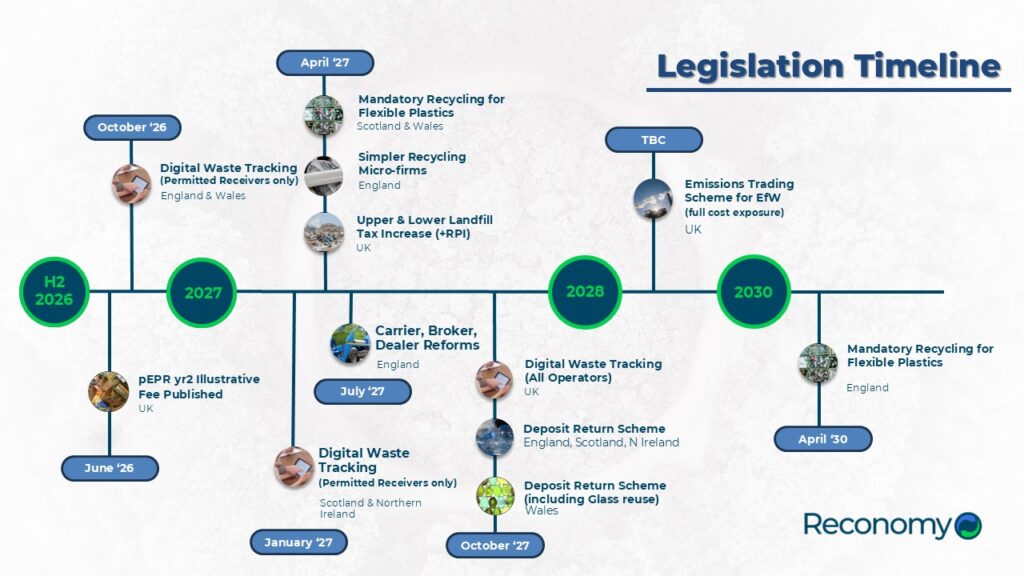
These dates reflect the legislative roadmap presented at the event and should be checked against current government guidance when planning compliance.
David Gudgeon, Head of External Affairs at Reconomy, provided an informative overview of the changing regulatory landscape and the implications for hospitality businesses.
His presentation highlighted the growing importance of understanding how waste is produced, segregated, collected, tracked and ultimately managed.
As environmental requirements continue to develop, businesses will increasingly need to demonstrate greater accountability and transparency throughout their waste-management processes.
David discussed several significant developments.
Practical Steps Businesses Can Take Now
David also demonstrated how reviewing waste arrangements can deliver measurable financial benefits.
Rather than simply accepting existing collection arrangements, businesses should consider whether they have the correct bin sizes, collection frequencies and recycling capacity.
His examples showed how optimising container sizes, improving waste segregation and reviewing collection arrangements can generate substantial savings.
However, technology and processes alone are not enough.
David emphasised the importance of staff engagement, clear signage, training and effective communication to ensure that waste-management systems operate successfully.
The takeaway: businesses should understand their waste streams now, engage with their suppliers and waste contractors, and identify opportunities to improve before regulatory changes create additional pressures.
Contact David Gudgeon – Reconomy
davidgudgeon@reconomy.com | 07702 518 967
From Kitchen Waste to Resource – Cameron Morshead, Heckfield Place
One of the most inspiring examples of the circular economy in action came from Cameron Morshead of Heckfield Place.
Cameron explained how sustainability is embedded throughout the estate’s food operation, with a strong emphasis on seasonal produce, reducing waste and making the most of available resources.
The kitchen sources meat from the estate’s farm and makes extensive use of seasonal vegetables.
Rather than allowing surplus produce to go to waste, the team uses traditional preservation techniques such as pickling and fermentation to extend its usable life and create ingredients for future menus.
Food waste is also managed on-site using an anaerobic digester, allowing suitable organic material to be processed and returned to support the estate’s growing activities.
Cameron explained that most food waste can be processed through the system, although hard bones and shellfish present challenges.
This creates a practical circular approach, connecting food production, preparation, waste management and the estate’s wider agricultural activities.
It was a powerful example of how a commitment to sustainability can influence the entire food journey, from farm to plate and back to the land.
Contact Cameron Morshead – Heckfield Place
Collaboration – The Real Value of Hospitality Networking
Throughout the morning, one theme became increasingly clear: no single organisation can deliver sustainability in isolation. Progress depends on businesses, suppliers, waste contractors, educators and industry professionals sharing knowledge, challenging existing practices and exploring new approaches.
This is precisely why Hospitality Networking Hampshire was established. Our events provide opportunities for people from different parts of the food sector to meet, exchange experiences and develop relationships that can lead to practical improvements. We are continuing to facilitate introductions between attendees, speakers, sponsors and colleagues who were unable to attend.
Thank You to Our Sponsors, and Speakers.
A special thank you to Girbau and The Plastic Solution for sponsoring the event and sharing their innovative approaches to sustainability.
We would also like to thank David Gudgeon, Cameron Morshead and Phil Shelley for their valuable contributions.
Missed the Event? Catch Up on the Presentations
Whether you attended or were unable to join us, you can access the presentations and share the key messages with your colleagues.
Download the HNE Hampshire Sustainability Presentations
What’s Next for HNE Hampshire?
Our next Hospitality Networking Hampshire event is planned for February 2027 at Fareham College. The theme will focus on skills, employability, HR and alternative pathways into the hospitality industry, including how employers can support individuals who may not follow traditional academic routes.
We will explore how collaboration between hospitality businesses, education providers, apprenticeships and employment-support organisations can help address recruitment challenges and create opportunities for a more inclusive workforce.
Would you like to attend, contribute as a speaker or explore sponsorship opportunities?
Please get in touch to register your interest and help shape future HNE Hampshire events.
Hospitality Networking Exchange – Hampshire Organised in collaboration with Food Allergy Aware and industry partners.
To be added to the distribution list Click here, find out more by clicking here.