
At the start of the year, we launched our #allerjanuary resource pack to support businesses in reviewing and strengthening their allergen management. The response was incredibly encouraging, with over 100 downloads across a wide range of sectors including local authorities, NHS settings, hospitality, bakeries, care homes, consultants, and education.
As part of this initiative, we asked a simple but important question:
“What are your challenges for allergen management?”
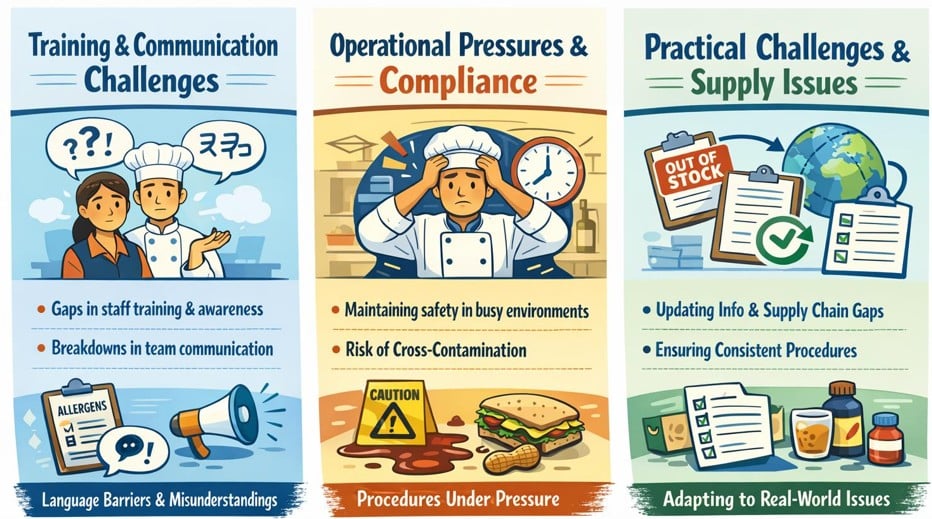
The responses reveal a clear and consistent picture while awareness of allergens is increasing, the practical challenges of implementation remain significant.
Training and Awareness: Still the Biggest Gap
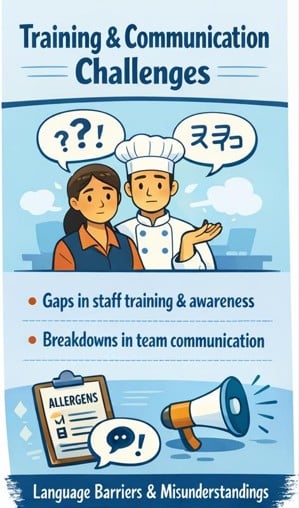
The most frequent theme was training. Whether it was “training staff,” “staff awareness,” or “training volunteers,” the message is clear: having a policy is not enough people need to understand it and apply it consistently.
There is also a wider call to action:
- “Train all hospitality industry importance of allergy”
- “Increase awareness within local businesses”
- “Educating food businesses and raising awareness”
This highlights a sector-wide need for ongoing, engaging, and practical training, not just one-off sessions.
Communication Breakdowns
Clear communication is critical, yet several responses pointed to failures in this area:
- Schools not identifying pupils at point of service
- Patient diet information not reaching catering teams
- Menu changes not being updated with allergen information
These examples show that allergen management is not just a kitchen issue it’s an organisational one.
Breakdowns between teams (front of house, kitchen, care staff, wards) create real risk.
Compliance vs Reality
Many respondents were from Local Authorities who highlighted the challenge of getting and maintaining compliance:
- “Businesses struggling to maintain compliance”
- “Getting businesses to comply!”
- “Getting businesses to be fully compliant”
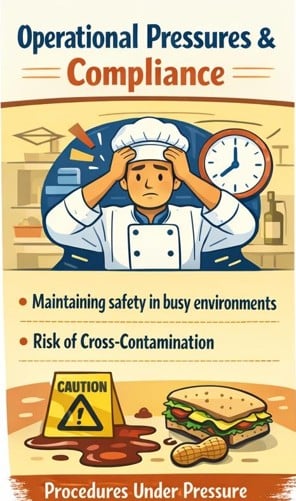
This reflects a common issue knowing what to do versus doing it consistently under pressure.
Operational realities such as staff turnover, busy services, and competing priorities often lead to gaps between policy and practice.
Cross-Contamination and Risk Management
Unsurprisingly, cross-contamination remains a major concern:
- “Cross contamination”
- “Cross contamination risks”
- “Risk assessment and PAL”
While awareness exists, the challenge lies in embedding controls into everyday processes, particularly in complex or high-volume environments.
Complexity Across Different Settings
The diversity of respondents highlights how allergen management challenges vary by sector:
- Education & schools: identifying individuals at point of service
- Healthcare: communication between wards and catering teams
- Hospitality & bakeries: managing menus, labels, and fast-paced changes
- Consultants & local authorities: supporting a wide range of businesses with differing levels of knowledge
There is no “one size fits all” approach solutions must be tailored to the environment.
Barriers: Language, Motivation, and Resources
Several practical barriers were raised:
- Language barriers
- Staff motivation
- Paperwork and administrative burden
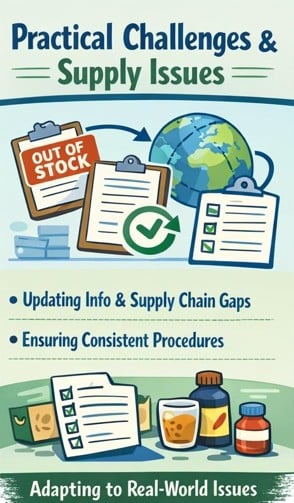
- Keeping information updated
These are often underestimated but have a significant impact on day-to-day compliance and safety.
Supply Chain and External Pressures
An interesting insight came from those working with suppliers:
- Challenges educating non-UK based suppliers on UK allergen expectations
- Managing outside caterers and third parties
This reinforces the need to look beyond internal processes and ensure the entire supply chain understands allergen risks.
A Desire for Simplicity and Practical Solutions
Among the challenges, there was also a clear ask:
- “Teaching simple strategies creatively”
- “Always looking for fresh ideas”
- “Having the right information”
Businesses are not just looking for more information they want practical, easy-to-implement solutions that work in real environments.
Final Thoughts
The feedback from #allerjanuary confirms that while allergen awareness is improving, consistent implementation remains the biggest challenge.
Across all sectors, the key themes are:
- Training and staff engagement
- Clear communication
- Practical compliance
- Managing risk in real-world settings
This is exactly why regular review, refresher training, and continuous improvement are essential.
Conclusion
The #allerJanuary feedback highlights a consistent reality across all sectors: allergen management is not just about having policies in place, but about ensuring they are understood, implemented, and maintained in day-to-day operations.
While training, communication, and compliance remain the most common challenges, the underlying message is clear businesses want practical, simple, and workable solutions that fit within real operational pressures.
From schools and healthcare settings to hospitality and small producers, the need for clearer processes, stronger staff engagement, and more consistent information flow is universal.
The positive takeaway is that awareness is strong and willingness to improve is there. The next step is turning that intent into sustained action through ongoing training, clearer systems, and continuous review.
If you are reflecting on your own allergen management following these insights, now is the ideal time to assess where improvements can be made and ensure your approach remains robust, practical, and fit for purpose.
It’s Not Too Late to Take Action
If you haven’t yet reviewed your allergen management, you can still download the resource pack and start identifying gaps within your own organisation:
https://foodallergyaware.co.uk/allerjanuary2026-your-free-allergen-management-resource-pack/
If these challenges resonate with you, support is available whether that’s training, reviewing your systems, or helping embed practical solutions that work for your team.