
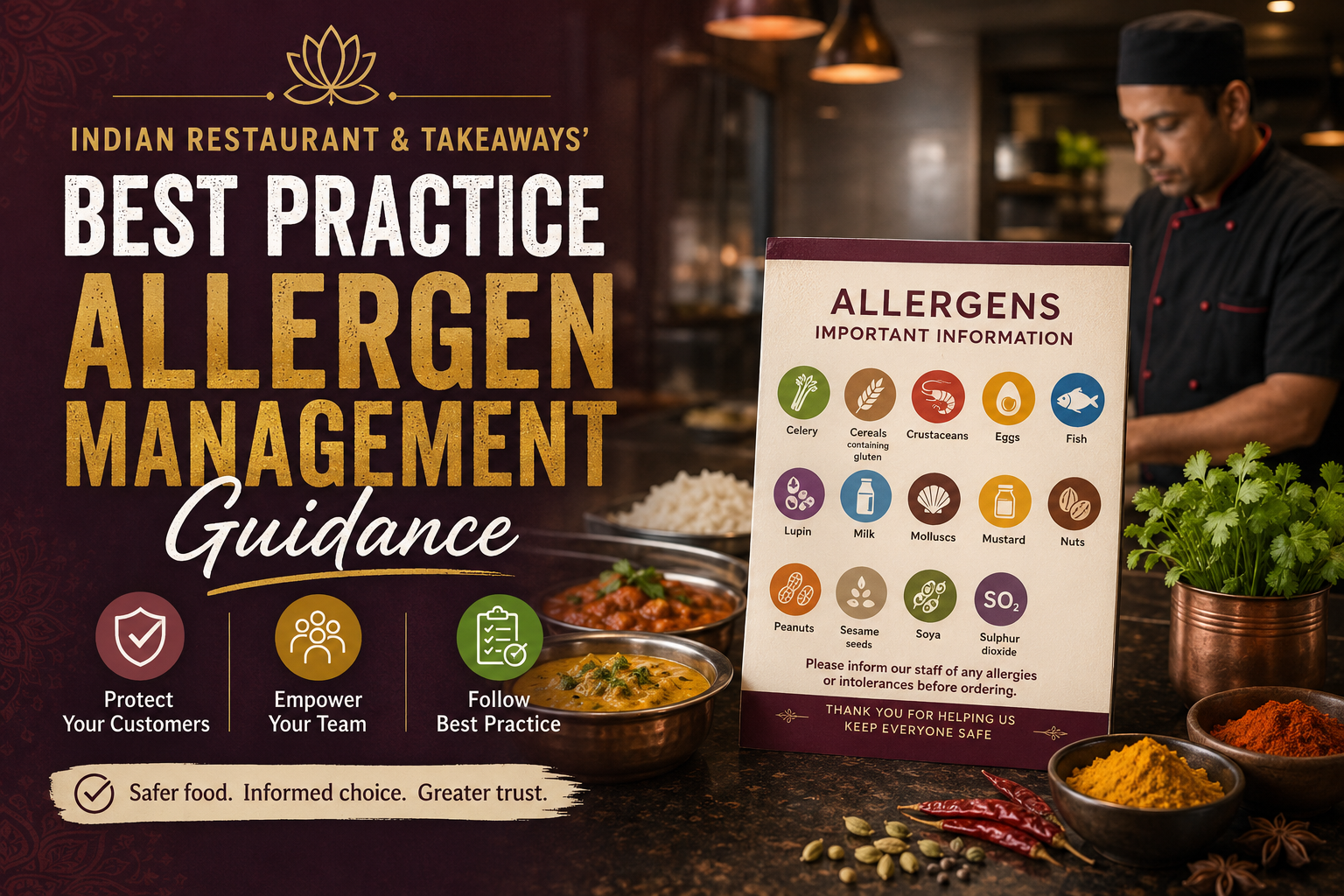
If you missed our recent webinar on allergen management guidance for Indian restaurants and takeaways, you can now catch up by watching the recording online.
Delivered by Food Allergy Aware on behalf of Chesterfield Borough Council, the webinar focused on practical allergen management guidance for food businesses serving the food hypersensitive customer, which includes those with food allergies, intolerances and coeliac disease.
Using real-life examples, from our onsite visits in October 2024 we offer industry guidance and practical operational advice, the session explored how businesses can improve allergen communication, reduce cross-contamination risks and build safer systems for both dine-in and takeaway services.
You can view the Case study of our visits for Chesterfield by clicking here
Why Allergen Management Guidance Matters
Food businesses have a legal and moral responsibility to provide accurate allergen information and safe food practices for customers. The webinar highlighted how robust allergen management is not just about compliance it also helps build customer trust, confidence and business reputation.
The session also reinforced the importance of embedding allergen management into everyday operations, including supplier checks, staff training, kitchen processes, online ordering and customer communication.
Key Webinar Highlights & Top Tips
Review Your Allergen Information Regularly
Menus, recipes, ingredients and suppliers can change frequently. Businesses should ensure allergen matrices and written allergen information are reviewed and updated whenever changes occur.
Communication is Critical
Customers should receive clear, accurate and consistent allergen information both verbally and in writing. Staff confidence and knowledge are essential when handling allergy enquiries.
Think Beyond the Top 14 Allergens
The webinar highlighted that customers may react to allergens outside the legally declarable Top 14 allergens, making open conversations and accurate ingredient knowledge even more important.
Manage Cross-Contamination Risks
Practical examples discussed included:
- Shared fryers and cooking oils
- Spice blends and marinades
- Shared utensils and preparation areas
- Buffet service and takeaway packing processes
Businesses were encouraged to assess allergen risks throughout the entire food journey from delivery and storage through to preparation and service.
Train All Staff
Allergen awareness should not sit with just one person. Front of house teams, kitchen staff, managers and delivery teams all play a role in keeping customers safe.
Keep Procedures Practical
Policies and Food Safety Management Systems should be clear, realistic and easy for teams to follow consistently during busy service periods.
Supporting Safer Hospitality
At Food Allergy Aware, we continue to support hospitality businesses, local authorities and food service providers through training, consultancy, audits and practical resources designed to improve allergen safety standards across the sector.
You now have the opportunity to watch the webinar recording at a time that suits you
Check out how we can help your business Link
Book a call by clicking here to discuss how we can assist your business