
As someone who spends a great deal of time dining out, auditing hospitality businesses and working with catering teams, I often find myself looking beyond the quality of the food. I look at what is left on the plate.
One thing I have noticed time and time again is the amount of perfectly edible food being returned to the kitchen untouched. In many cases, this waste could easily have been prevented.
Does Every Plate Need a Garnish?
Personally, if I’m ordering a sandwich or light lunch, I enjoy a fresh garnish of lettuce, tomato, onion or a small portion of coleslaw. It adds colour, freshness and complements the meal.
However, I have to admit that a handful of rocket leaves scattered on a plate doesn’t really constitute a garnish in my opinion. It can feel like a default addition rather than something that genuinely enhances the dish.
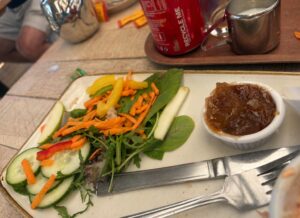
When dining with friends, the opposite is often true. They don’t like salad or garnish at all. They’ll specifically ask for it to be left off their meal, yet more often than not it still arrives on the plate. Unsurprisingly, it goes straight back to the kitchen untouched.
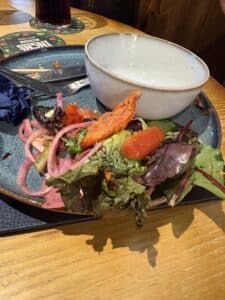 Recently, while visiting a busy garden centre café, I couldn’t help but observe the finished plates around me. Looking at the returned plates, I estimated that around half still contained untouched garnish.
While this wasn’t a scientific study, it certainly raised an interesting question: ‘How much money are businesses throwing away simply because nobody asked the customer whether they wanted the garnish in the first place?’
The Free From Perspective
Food waste isn’t limited to standard meals. As someone who often orders gluten-free options, I frequently experience another form of unnecessary waste. A recent breakfast order illustrates the point perfectly. I was offered gluten-free toast and requested just one slice. Despite this, two slices arrived. This isn’t unusual.
Many businesses understandably want to provide excellent service to customers with dietary requirements, but in doing so they can unintentionally overcompensate. Gluten-free bread is considerably more expensive than standard bread, so every unnecessary slice that ends up in the bin increases both costs and waste.
Cost of food waste
These observations aren’t just anecdotal. According to WRAP (Waste & Resources Action Programme) one in every six meals served in UK hospitality is wasted.
The hospitality and food service sector generates approximately one million tonnes of food waste every year, with around 75% being avoidable. Food waste costs the industry over £3 billion annually, with the average outlet losing around £10,000 each year.
Food waste occurs at three main stages 45% during food preparation, 34% from customers’ plates, 21% through spoilage before preparation.
Perhaps even more telling is that 48% of diners say portions are simply too large, with customers leaving around 15% of a main meal uneaten on average. Portion size remains the biggest reason food is left behind.
 Small changes can make a big difference
One local fish and chip shop has adopted an approach that I think deserves recognition. Rather than automatically piling chips onto every plate, they serve a sensible portion initially. Halfway through the meal, staff ask customers whether they would like additional chips. If they do, they receive them. If not, those chips haven’t been cooked or wasted.
It’s a simple idea, but an effective one. This approach may not suit every operation, particularly busy self-service restaurants or cafés, but there are opportunities where it could work. Restaurants, for example, often have quieter periods such as over-60s lunch clubs where table service allows staff to interact with customers.
Asking whether they’d like more rather than automatically serving excess food could reduce waste while maintaining excellent customer service and goo interaction stimulating communication to the customers preferences.
Ask the customer
Sometimes the simplest solution is the most effective. Rather than automatically adding salad garnish, coleslaw, sauces or accompaniments to every plate, why not ask?
It takes only a few seconds but could significantly reduce waste across hundreds of meals each week. Not every garnish enhances the customer’s experience, but every unnecessary garnish increases purchasing costs, preparation time and waste disposal costs.
Turning waste into useful data
Returned plates shouldn’t simply be scraped into the food waste bin. They provide valuable feedback. Having the server ask the customer if everything is okay with the meal and advise how to communicate to understand fully why food was left. Consider if a near miss situation needs recording with reference to an allergen issue.
Businesses should also record which dishes generate the most waste, the weight of returned food, preparation waste and spoiled or out-of-date ingredients. By analysing this information, operators can identify trends, improve menus and reduce unnecessary purchasing.
Better menus lead to better decisions
Customers are far less likely to leave food if they know exactly what they’re ordering. Menus should clearly describe what the dish contains, portion sizes, optional accompaniments, garnishes, sauces that can be removed, spice levels and dietary options. Giving customers more choice before the meal is prepared often results in less food being wasted afterwards.
Target, measure and act
Using initiatives such as WRAP’s Guardians of Grub helps operators understand where waste occurs, benchmark performance and identify practical ways to improve profitability while reducing environmental impact.
A challenge for restaurants
Hospitality businesses are often recognised for offering generous portions and excellent value, which are important aspects of the customer experience. However, generous doesn’t always have to mean excessive.
Offering customers a choice of portion sizes, asking whether they would like garnishes or accompaniments, and regularly reviewing what is returned on customers’ plates can help reduce food waste without compromising service. These simple changes can improve gross profit, support sustainability objectives and ensure customers receive a meal that better matches their preferences and appetite.
As food prices continue to rise, reducing avoidable waste is one of the easiest ways for hospitality businesses to improve profitability Perhaps the question every operator should ask isn’t simply, ‘What are we serving?’ Instead, it should be: ‘What are our customers actually eating?’
Because every untouched garnish, every unnecessary slice of gluten-free toast and every oversized portion represents not just food in the bin, but an opportunity to serve customers better while reducing costs and protecting the environment.