
The demand for vegan and plant-based food has grown significantly over the past decade. Alongside this growth, consumers are increasingly seeking free-from options to manage allergies, intolerances, coeliac disease, and other food hypersensitivities.
While vegan and free-from products often appear together on menus and supermarket shelves, they are not the same thing. One of the biggest challenges facing the hospitality industry is ensuring that both customers and staff understand the difference.
Vegan Does Not Mean Allergen-Free
A common misconception is that vegan food is automatically safe for people with allergies. In reality, many vegan products contain some of the most common allergens found in food service.
Plant-based alternatives frequently use ingredients such as:
Soya
Nuts
Peanuts
Sesame
Wheat
Oats – (need to confirm if Gluten Free oats)
Mustard
For example, a vegan burger may contain wheat and soya, a dairy-free cheese alternative may contain nuts, and a vegan dessert may contain multiple allergens despite being completely free from animal products.
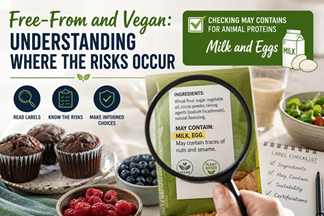
Customers who assume “vegan” means “safe for allergies” could unknowingly put themselves at risk if allergen information is not clearly communicated, especially where eggs, and milk are concerned – always check for the ‘May Contains’ labelling.
Where Problems Commonly Occur
Menu Descriptions
Menus often promote dishes as vegan but fail to highlight the presence of allergens, or may contains risks. While allergen information may be available elsewhere, customers can sometimes focus on the vegan claim and overlook the need to ask further questions.
Clear signposting and encouraging guests to discuss allergies with staff remain essential.
Product Substitution’s
One of the biggest risks occurs when ingredients are substituted.
A traditional recipe may be adapted to become vegan by replacing dairy with a soya-based alternative or using nuts to provide texture and flavour. Unless allergen information is updated at the same time, incorrect information may be passed to customers.
Regular review of recipes and allergen matrices is critical whenever suppliers or ingredients change.
Cross-Contamination
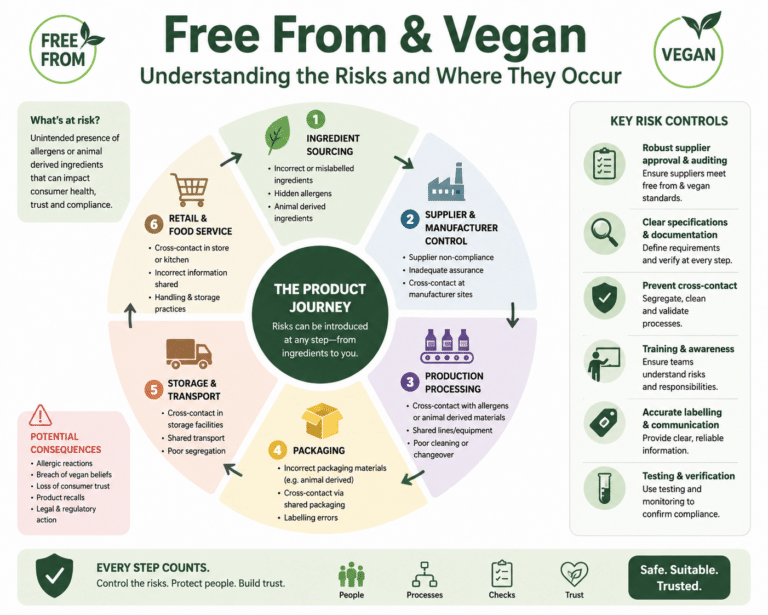
Even when a dish does not intentionally contain an allergen, cross-contamination can occur during storage, preparation, cooking, or service.
Common examples include:
Shared utensils.
Shared preparation areas.
Shared fryers.
Inadequately cleaned equipment.
Incorrect storage practices.
Plant-based kitchens often handle large quantities of nuts, seeds, and soya products, increasing the need for effective allergen controls.
Front-of-House Communication
Guests often place significant trust in front-of-house teams. However, staff may not always understand the difference between a dietary preference and a medically diagnosed allergy.
Questions such as:
“Is it vegan?”
and
“Is it safe for my allergy?”
are not the same.
Staff should be trained to recognise when further information is required and know how to access accurate allergen information rather than making assumptions.
The most successful businesses create systems that encourage open dialogue, allowing guests to explain their needs and enabling staff to provide accurate information.
Allergens outside the #Top14
Hospitality businesses are increasingly seeing customers with needs that extend beyond the #Top14 UK regulated allergens.
These may include sensitivities to:
Garlic
Onion
Coconut
Kiwi
Histamine-rich foods
Food additives and preservatives
Whilst these allergens may not be legally required to be highlighted, they can still have a significant impact on the guest experience, and still cause anaphylaxis!
Building Trust Through Transparency
The Food-hypersensitive guest often tell us that confidence and trust are just as important as the menu itself.
They are looking for businesses that:
Welcome conversations about allergies and intolerances.
Provide accurate ingredient information.
Have trained and knowledgeable
Follow clear procedures.
Communicate honestly about what can and cannot be safely provided.
A guest is more likely to trust a business that openly discusses limitations than one that offers false reassurance.
Moving Forward
The growth of plant-based dining is a positive development, providing more choice and encouraging greater awareness of dietary needs. However, vegan and free-from should never be used interchangeably.
For hospitality businesses, the key is understanding that every dietary requirement should be assessed individually. Good allergen management is not about assumptions; it is about communication, training, robust procedures, and creating a positive food safety culture where guest safety comes first.
By recognising where the risks occur and addressing them proactively, businesses can provide a safer, more inclusive dining experience for all customers, whether they choose vegan food as a lifestyle choice or rely on accurate allergen management for their health and wellbeing.
Certification and Continuous Improvement
For businesses looking to strengthen their allergen management further, our pilot certification programme provides independent validation of existing processes. It helps demonstrate due diligence, identify areas for improvement, and build greater confidence across both front and back of house. In addition to supporting compliance, it offers a clear competitive advantage by enhancing trust, reducing risk, and strengthening customer confidence in your brand.
Want to find out more how we can help you get CERTIFIED…. Click here